Use these six free project proposal templates for Word to explain a proposed initiative, outline the work, estimate resources, and request a clear decision. Choose a document that matches your audience rather than treating every proposal as the same type of application.
The collection includes internal project approval forms, community funding structures, a worked education example, historical grant instructions, and a marketing research proposal. Each download contains a Word document with its own scope and editing needs.
Compare the templates | Write your proposal | See a practical example
Download the Free Project Proposal Templates
Format: Six .docx Word documents, each supplied in a separate ZIP archive. Extract the ZIP and save a working copy before editing. Separate Excel calculators and PDF versions are not included.
Replace cover-page filler text, sample contacts, organization references, and author instructions. These files are starting points, not evidence of project approval or confirmation that a funder accepts the format.
01. IT Project Proposal
Covers sponsorship, ownership, stakeholders, objectives, assumptions, success measures, risks, delivery approach, scope, milestones, and resource estimates.
Use and editing note: Best for an internal technology initiative. Replace university references and inherited queue-management rules; define approval roles and timescales for your own organization.
02. Project Justification and Approval Form
Includes project details, sponsors, benefits, alternatives, timeline, labor estimates, other costs, and a review recommendation section.
Use and editing note: A useful starting point for an internal approval request. Replace campus terminology and leave decision fields uncompleted until the authorized reviewer makes a decision.
03. Community Project Funding Proposal
Organizes beneficiaries, project background, objectives, intended outcomes, risks, staffing, work phases, budget needs, and supporting attachments.
Use and editing note: Suitable for structuring a community or program funding request. Replace beneficiary examples and align the proposal with the intended funder’s current requirements.
04. Education Project Proposal Example
A populated example covering a school-building and education initiative, with background, goals, activities, community participation, monitoring, and a budget.
Use and editing note: Use as a structural example, not a blank application. Replace all project claims, locations, people, costs, and contact details; check section numbering and budget consistency.

05. Historical Grant Proposal Narrative
Contains a program-specific planning-grant narrative, including objectives, project design, proposed activities, management, staffing, timeline, and budget prompts.
Use and editing note: This file refers to FY 2015 ART grant instructions. Its funding cap, application forms, deadlines, and eligibility language are historical material, not verified current grant requirements. Obtain the current application package for any live submission.
06. Marketing Research Proposal
Covers research objectives, background, hypothesis, data collection, methodology, schedule, budget, ethics, limitations, and anticipated implications.
Use and editing note: Best for proposing a market-research study. Replace inherited drafting tips and product references with your own methods, evidence, and participant safeguards. Review source acknowledgements and usage terms before redistribution.
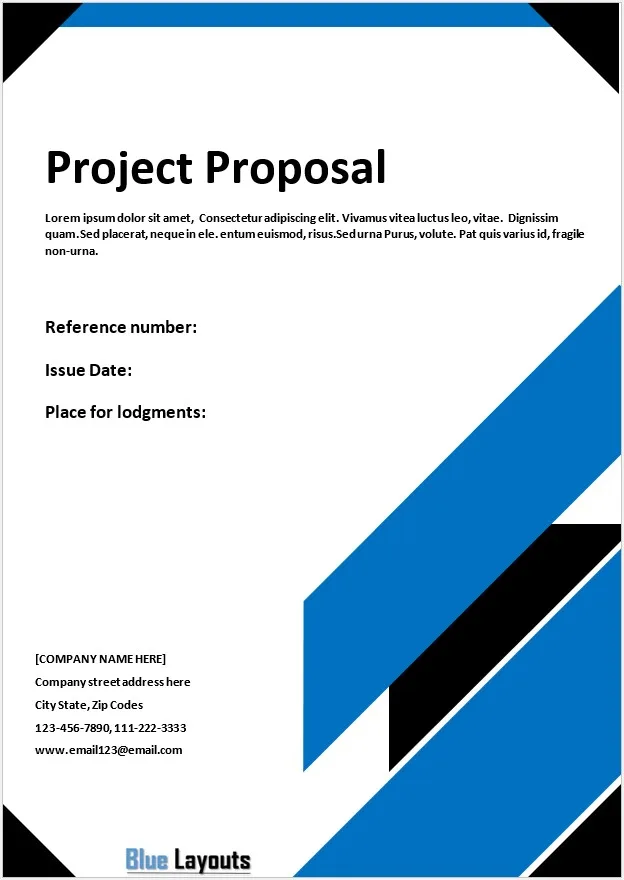
Which Proposal Template Should You Choose?
| Your purpose | Starting point |
|---|---|
| Propose an internal IT initiative | Template 01 |
| Explain and review an internal project request | Template 02 |
| Outline a community funding proposal | Template 03 |
| Study a populated education-project example | Template 04 |
| Examine a historical grant narrative structure | Template 05; not a current application guide |
| Propose marketing research | Template 06 |
For a live grant or procurement request, follow the recipient’s required questions, format, attachments, and submission instructions. A general template should support that response rather than override the specified requirements.
What Is a Project Proposal?
A project proposal explains a need, the work you recommend, the resources it requires, and the decision you want the reader to make. It should help the reviewer assess whether the proposal is worthwhile, feasible, and sufficiently defined to move forward.
A business case gives more attention to justification and alternatives. A delivery plan develops approved work into tasks, responsibilities, and dates. Your proposal can summarize those subjects without pretending that every estimate or decision is already final.
How to Write a Clear Project Proposal
1. State the decision you need
Identify the reader and request, such as approval for a discovery phase, funding for a pilot, or permission to develop a detailed plan. State the amount, scope, and conditions attached to that request.
2. Explain the problem with evidence
Describe the current situation, who is affected, and the consequence of leaving it unchanged. Use dated records, a measured baseline, or clearly labeled estimates. Avoid unsupported claims that your approach guarantees success.
3. Define objectives, deliverables, and boundaries
Separate the result you want from the outputs you will produce. For example, a training guide is a deliverable; fewer processing errors is an intended outcome. State how results will be measured, what is included, and what is outside scope.
4. Present the approach and timetable
Outline the main phases, milestone dates, dependencies, and responsibilities. Explain what the client or sponsor must provide. Use an action plan for supporting task detail when needed, while keeping the proposal focused on the approval decision.
5. Build a traceable budget
Separate one-time costs from recurring commitments. State the currency, estimate date, quantities, rates, and assumptions. Distinguish total project cost from the amount requested when other confirmed funding sources contribute.
A project cost summary worksheet can support item and labor estimates. Check its formulas before transferring figures, and reconcile the proposal summary with the detailed estimate.
6. Address uncertainty and review
Name the main risks, assumptions, mitigation actions, and owners. Explain how progress and results will be reviewed. For research, describe consent, confidentiality, data handling, and methodological limitations appropriate to the study.
7. Finish with a concise decision request
Summarize the proposed work, cost, expected value, main conditions, and requested next step. Write the opening summary after developing the detail so both agree. Keep examples, estimates, and confirmed commitments visibly distinct.
Simple Project Proposal Example
This fictional example illustrates an internal pilot request. It is not a funding benchmark or a completed proposal.
Project: Standardize the team’s request intake process.
Need: A four-week review found that 18 of 60 requests required follow-up because essential information was missing.
Proposed work: Design one request form, test it with five users, revise it after feedback, and provide a short operating guide.
Scope: One team and one request type. Wider deployment and integrations are excluded.
Schedule: Week 1 — requirements; Week 2 — setup; Week 3 — pilot; Week 4 — review and recommendation.
Budget: 20 staff hours at an assumed internal cost of $30 per hour, plus $150 for pilot setup costs: total estimated cost $750.
Success measure: Target a missing-information rate below 15% in the pilot, compared with the observed 30% baseline, using the same review criteria. Report the sample size and any limits on comparability.
Main dependency: The team manager must confirm the required fields and provide pilot users.
Decision requested: Approve the four-week pilot, allocate the 20 staff hours, and authorize $150 of additional spending. Review results before deciding on rollout.
The example separates internal resource cost from additional spending and requests a limited pilot rather than assuming full rollout is approved. Once work starts, a project status report can track progress, issues, and decisions against the agreed scope.
Before You Submit the Word Document
- Replace cover-page filler, repeated text, sample names, dates, budgets, and contact details.
- Remove author guidance while preserving any required acknowledgements.
- Check that the summary, budget, timeline, and requested funding agree.
- Replace institutional policies and historical grant instructions with the recipient’s current requirements.
- Update the table of contents, headings, page numbers, and cross-references.
- Review page breaks and the exported PDF, including all required attachments.
Frequently Asked Questions
Are all six files general business project proposals?
No. They include internal approval forms, community funding material, an education example, a historical grant narrative, and marketing research. Review each description before choosing.
Can I use these templates for a grant application?
Use the relevant structure only after checking the current funder’s instructions. Template 05 contains historical program requirements and should not be treated as a current application package.
Do the Word files calculate project costs?
Do not assume displayed tables calculate totals. Prepare and verify your estimates separately, then ensure all transferred figures agree.
Can I edit a template in Google Docs?
You can try importing the .docx file. Check tables, positioned text, page breaks, and contents pages because formatting can change.
How long should a project proposal be?
Use the recipient’s required length where specified. Otherwise, include enough evidence for the decision without repeating the same points across the summary and supporting sections.
Can I save the proposal as a PDF?
Yes. Export the edited Word document and inspect the result before submission. Retain the editable master and the submitted version.


Pingback: Free Bid Proposal Template for Word + Pricing Example
Pingback: Free Sponsorship Proposal Templates for Word + Examples